A roofing company in Tulsa let an AI tool write their Facebook posts for six months. One post mentioned they were "GAF Master Elite certified" — a real, prestigious certification, with a real public registry of certified companies. They weren't on it. A homeowner cross-checked, called them out in the comments, and the company spent the next week explaining why their own social media account had lied about them.
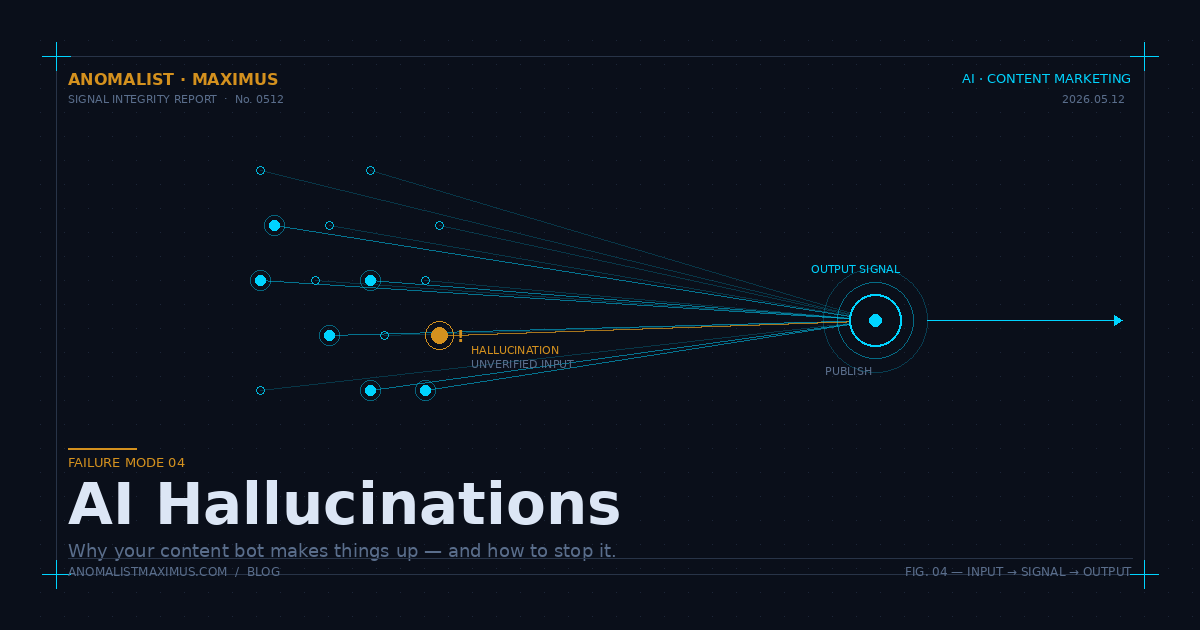
The tool didn't lie on purpose. It hallucinated. And every small business pushing AI content right now is one bad sentence away from the same problem.
What an AI Hallucination Actually Is
Let me be clear: an AI writing tool doesn't "know" facts the way you know them. It predicts the most statistically likely next word based on patterns in everything it's ever read. Most of the time, that prediction lands on something true. Some of the time, the most plausible-sounding sentence is also completely wrong.
Hallucinations aren't bugs. They're a feature of how these models work. The model is built to sound confident, not to be correct. When it doesn't have a real fact about your business, it generates one that fits the pattern of businesses like yours.
For casual chitchat, that's a quirk. For your business content, it's a liability with your name on it.
The Five Most Expensive Hallucinations
Here are the fabricated claims actively hurting small businesses right now. None of them look obviously wrong on the first read. That's exactly what makes them dangerous:
- Fake certifications and credentials. "Licensed, bonded, and BBB A+ rated since 1998." Maybe you are. Maybe you've been in business since 2014. The AI doesn't know — but it knows what contractors usually say in their posts.
- Invented prices, hours, and service areas. "Free estimates Saturdays 8am-2pm in Williamson County." Sounds totally normal. Also completely fabricated unless someone actually told the AI those are your hours.
- Made-up customer reviews or testimonials. "Jennifer M. from Bartlesville said our team was professional and on-time." Jennifer doesn't exist. The platform doesn't care. Your audience will, if they check.
- False statistics and phantom studies. "Studies show 73% of homeowners regret choosing the cheapest contractor." The number sounds plausible. The study doesn't exist. Anyone who tries to source it lands in confusion.
- Wrong service capabilities. "We service all major brands including Trane, Carrier, Goodman, and Mitsubishi." If you only work on three of those four, you just promised something you can't deliver — to every customer who calls.
Each of these has shown up in real AI-generated copy for real local businesses in the last twelve months. We've fixed them in onboarding more times than we can count.
Why Generic Chatbots Are Riskier Than Purpose-Built Systems
The free or near-free AI chatbots most small businesses are using have one job: produce text that sounds right. They don't know your hours. They don't know your service area. They don't know which certifications you actually hold. They fill the gaps with the most statistically likely answer for a business "like yours" — and that's where the trouble starts.
A generic chatbot writes for the average business in your industry. The average business is not your business. That gap between average and actual is where hallucinations live.
A properly set up content system does the opposite. It works from a verified brand profile — your real certifications, your actual hours, the specific brands you service, the cities you cover, the prices you can defend. When the system doesn't have a fact, it leaves the field blank or asks. It does not invent. This is the single most important difference between AI content that builds trust and AI content that erodes it — and it's exactly the kind of setup we cover in what AI content marketing actually means for a small business.
The Four-Minute Pre-Publish Review
You don't need a fact-checking department. You need a four-minute habit before anything labeled "auto-posted" gets near a live feed. Do this every time:
- Scan for any specific claim. Numbers, percentages, certifications, dates, brand names, locations, customer names. Anything specific is something to verify. Vague is safer than wrong.
- Verify the specifics against a source you control. Your website. Your license records. Your booking system. If you can't immediately confirm a claim from your own records, kill it or rewrite it.
- Watch for fake authority signals. Phrases like "studies show," "research confirms," "industry experts agree," and "named one of the top X" almost always come from nowhere. Cut them unless you can produce the actual source on demand.
- Confirm names and places. If the post mentions a specific customer, neighborhood, or location, make sure that person or place actually exists and is being referenced accurately.
- If in doubt, soften. Replace "we're the highest-rated HVAC company in the metro" with "our customers consistently rate us highly." The first is a claim someone can disprove. The second is defensible. Defensible always beats impressive.
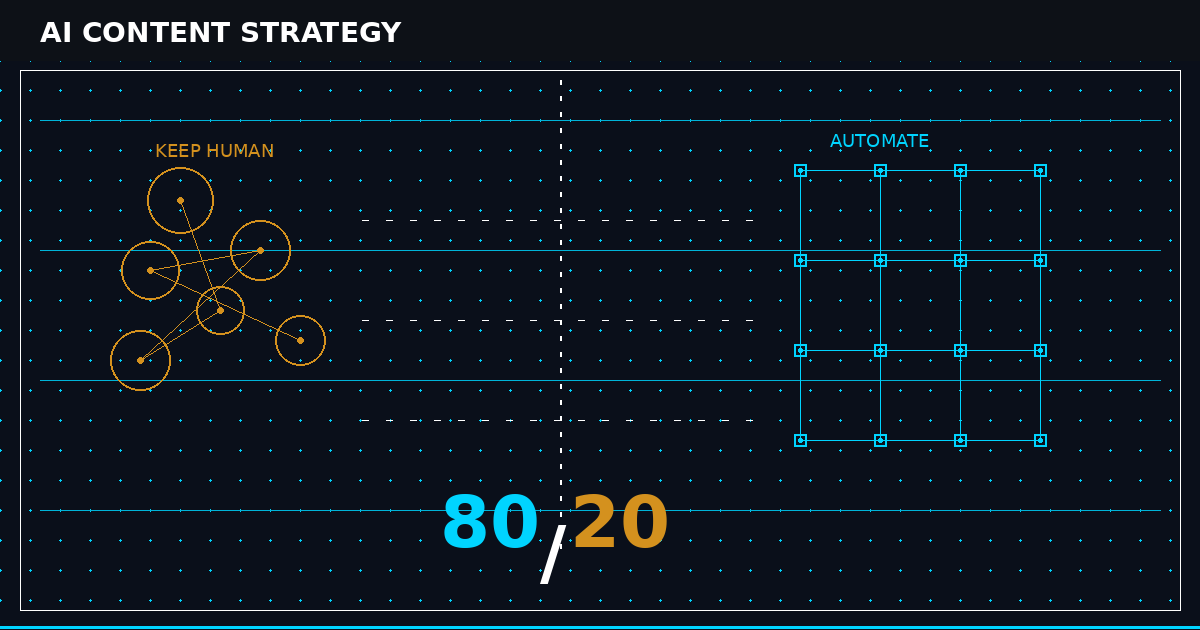
Four minutes. Most posts pass clean. The ones that don't were the ones that would have hurt you. This is the human side of the workflow that no model can do for you — and it sits right at the center of the 80/20 rule of what to keep human.
Common Mistakes That Let Hallucinations Through
- Trusting the AI because it sounds sure. Confidence in the writing is not evidence of accuracy. The model is built to sound sure even when it's wrong. Every specific claim is a draft, not a final.
- Skipping the review because the post "looks fine." Hallucinations don't look wrong. That's the entire problem. A fake certification reads exactly like a real one.
- Using a generic chatbot in a regulated industry. Insurance, financial services, healthcare, legal, contracting. These are industries where one invented claim doesn't just embarrass you — it can land you in front of a regulator. The bar is higher and the AI doesn't know that.
- Letting AI write reviews or testimonials, even as "examples." If a fabricated testimonial ends up on your page, you've graduated from bad content to a much bigger problem. Several states treat fake testimonials as deceptive advertising.
- Assuming customers won't fact-check. They will. The same AI tools that wrote your post are now what your customers use to verify it. Cross-checking is free and instant. Plan accordingly.
The Bottom Line
AI content is a force multiplier. So is AI content with a fabricated certification in it — just in the wrong direction. The same tool that helps you publish ten times faster can publish a lie ten times faster, with your business name attached to every single one.
The fix isn't to stop using AI. It's to stop trusting it blindly. Build the four-minute review into your workflow. Use a content system that works from verified facts, not statistical guesses. And if your current setup can't tell you where a specific claim came from, that's not a writing tool — that's a liability.
You don't need more posts. You need posts you can defend. Cut through the noise.