It's Monday morning. The cursor is blinking in your content calendar. You've got nothing.
Meanwhile, you had a 35-minute conversation with a customer Friday afternoon — the one where she explained why she almost didn't buy, what she was Googling at 11 PM, and the question her husband kept asking her. That conversation was your next month of content. You just didn't know it yet.
Here's the uncomfortable truth: most small business owners aren't out of content ideas. They're letting the best ones evaporate every time they talk to a customer.
Your Customers Are Writing Your Content Brief
Marketing podcasts will tell you to "find your voice" or "study trending topics" or build a content calendar from a template someone sold you on Etsy. All of that is downstream of the actual source.
The richest source of content ideas is the person who just bought from you, almost bought from you, or didn't buy from you. Their words are gold for three reasons:
- They're the search queries. The way your customer describes their problem is exactly how the next customer is typing it into Google at 11 PM.
- They're the objections. Whatever almost stopped them from buying is also stopping the silent majority who never even contact you.
- They're the social proof. Their before/after story converts better than any feature list you'll ever write.
When a customer says, "I was worried I'd be locked into a contract," that's a blog post, an Instagram reel, a Facebook FAQ, a Google Business Profile post, and a retargeting ad. Five posts from one sentence. And it's already been written for you — by the only person whose opinion actually matters.
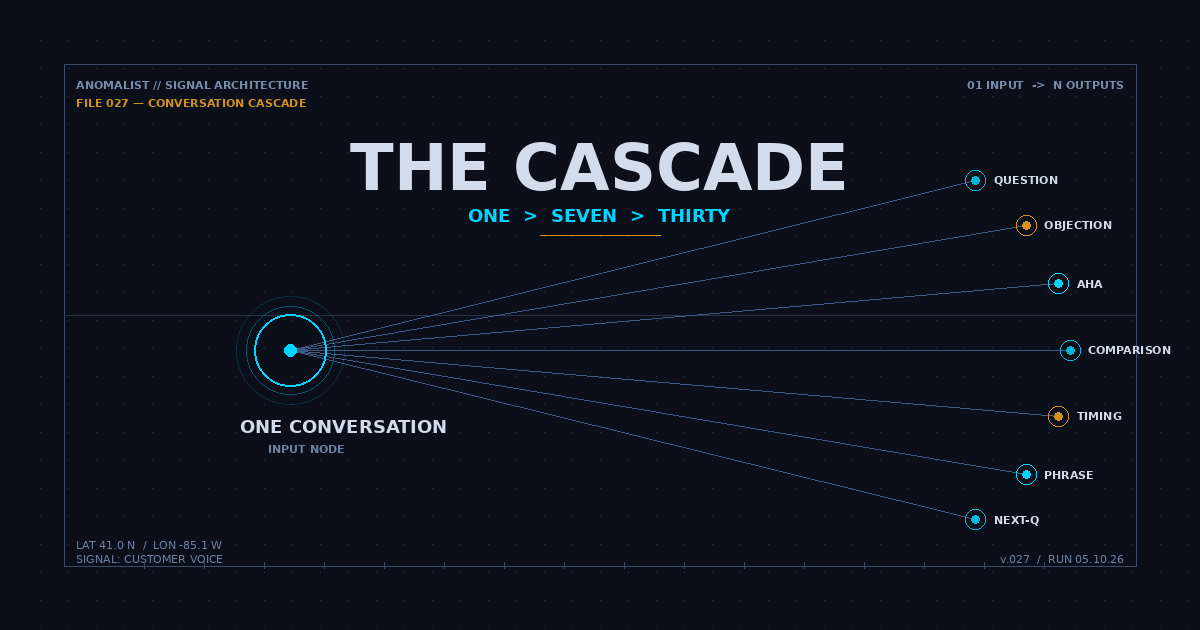
The Seven Content Seeds Hiding in Every Conversation
Stop trying to remember everything. Train yourself to listen for seven specific things. Every customer call, every walk-in, every DM, every email — these seeds are in there.
1. The Question Before The Question
What were they Googling before they found you? Not "best HVAC company near me" — the messier search. "AC blowing warm air but outside unit is running." That's a blog title. That's a TikTok. That's a Reel.
2. The Objection
What almost stopped them from booking? Price. Trust. "I didn't think you serviced my area." If one paying customer hesitated for that reason, fifty silent prospects bounced for the same one. Address it publicly.
3. The Aha Moment
When did it click? "I didn't realize you also did X." That's a content gap you can fill in 90 seconds with a phone video.
4. The Comparison
Who else did they look at, and why did you win? Don't punch sideways at competitors — instead, show the criteria your customer used. "Here's how to evaluate a contractor" is a stronger post than "we're better than Bob's."
5. The Time Pressure
Why now versus six months ago? Seasonality, life events, a breaking point — every "why now" is a calendar of content angles tied to when other people will hit the same trigger.
6. The Phrase
The exact words they use to describe what you do. Most business owners describe their service in industry-speak. Customers describe it in plain English. Steal their plain English. It outranks your industry-speak.
7. The Next Question
What are they about to need next? A roofer's customer who just got a new roof needs gutter help in 18 months. Anticipate it. Write the post now. Be there when they search.
Capturing It Without Being Weird
You don't need to record customers. You don't need a CRM with sentiment analysis. You don't need to take notes during the call.
You need a 90-second post-call ritual.
Right after the conversation ends — before you walk to the next thing — write down four lines:
- The exact question they asked first
- The objection they raised (or hinted at)
- The phrase they used to describe their problem
- One detail about their situation that surprised you
That's it. Drop it in a notes app, a Google Doc, a private Slack channel — whatever has the least friction. Do this for two weeks and you'll have more raw material than you can post in a quarter.
The goal isn't to remember every conversation. It's to make sure no conversation evaporates without leaving four lines behind.
Turning Notes Into a Month of Posts
Once you have notes from 4–5 conversations, you have a content calendar. Here's the workflow:
- Group the patterns. Read your notes. The same objection comes up three times? That's a pillar post. The same phrase keeps appearing? That's your hook.
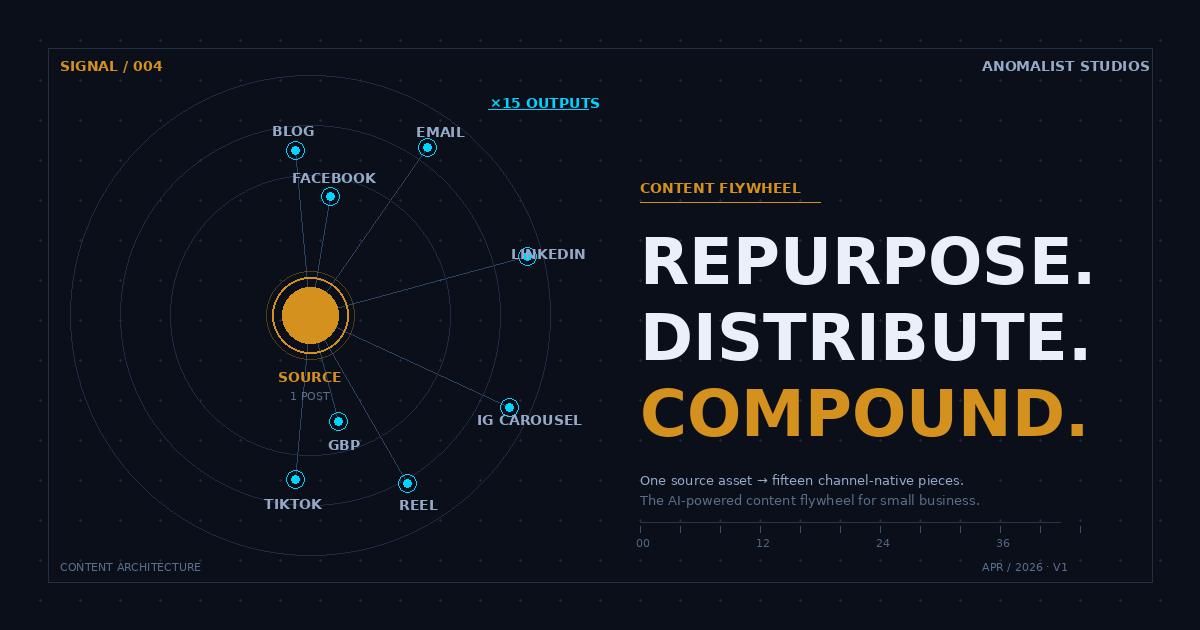
- Pick one seed per platform. A pattern objection becomes a long-form blog post. A surprising customer detail becomes an Instagram carousel. A common first question becomes a 30-second Reel. Same idea, different shapes — that's the repurposing flywheel in action.
- Use their exact words. Don't translate customer phrasing into business-speak. The phrase that came out of their mouth is the phrase that will land with the next prospect.
- Schedule a week, not a month. If you batch a month, life happens, you fall behind, and the content goes stale. A week of scheduled content using fresh customer notes always beats a month of stale content from a template.
- Loop the feedback. Track which posts get engagement. Posts written from real customer language almost always outperform posts written from the inside of your own head. That signal tells you what to listen for harder next time.
If you're using AI to draft, this method makes the AI dramatically better. Feeding a prompt that includes "write this in the voice of someone who just said: 'I was worried about being locked in'" produces something specific and useful. Feeding "write a blog post about HVAC service" produces sludge. The customer voice is what makes the difference — that's the same idea behind making AI sound like you.
Common Mistakes to Avoid
- Polishing the language. The grammar isn't always pretty. Leave it. Customers searching at 11 PM don't type in complete sentences either.
- Only capturing the wins. The customer who didn't buy is teaching you more than the one who did. Capture their objection too.
- Waiting for "good" conversations. Every conversation has at least one of the seven seeds. The boring ones still produce content.
- Hoarding the notes. The notes are useless if you don't turn them into posts within 7–10 days. Fresh language beats clever copy.
- Trying to do all seven seeds at once. Pick the one that came up loudest this week. Build content around that. Next week, pick another.
- Believing you'll remember. You won't. Write the four lines. Always.
The Bottom Line
You're not running out of content ideas. You're running out of captured content ideas. Every sales call, support email, and DM contains at least one post you should be writing — and most of them contain four or five.
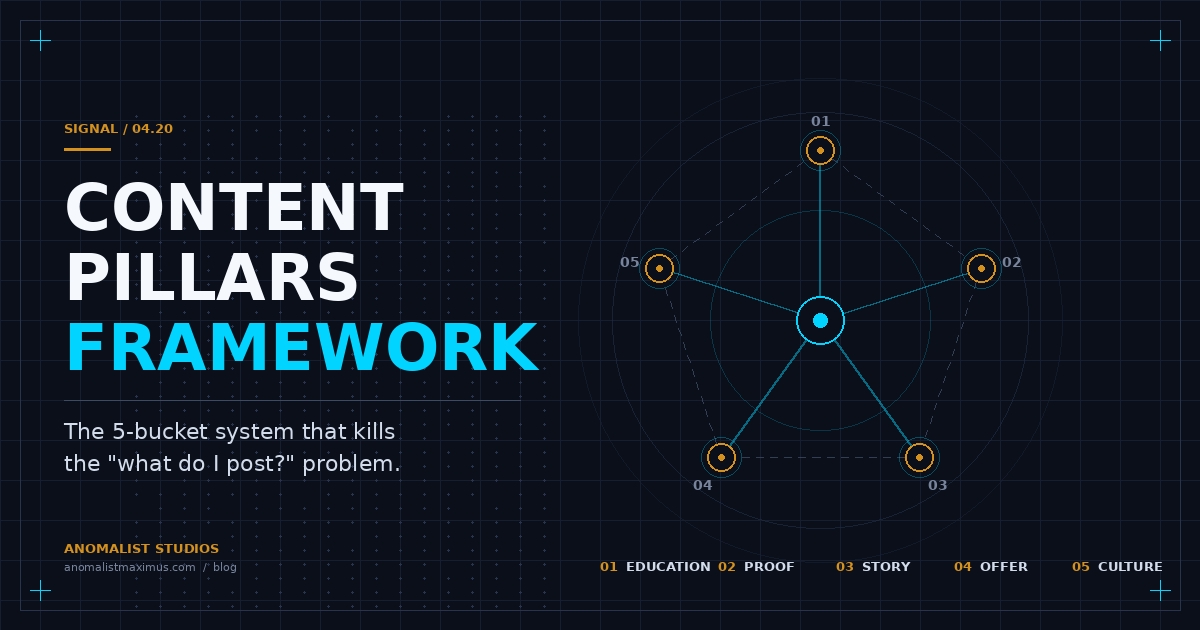
The businesses that win the content game aren't the ones with bigger ideas. They're the ones who built a 90-second habit that turns customer voice into content pillars that actually resonate.
Listen harder Friday afternoon. Show up Monday morning with notes instead of a blank cursor. Cut through the noise.