Here's the uncomfortable truth about fitness marketing on social media: the studios that look like they're crushing it online aren't necessarily filling classes. And the studios filling classes aren't always the ones with the prettiest grids.
If you run a boutique studio, a CrossFit box, an F45 franchise, a Pilates space, a yoga shala, or a neighborhood gym, you're competing for attention against a feed that has gotten genuinely brutal. Every other fitness account in your zip code is posting transformation photos, dumbbell-on-floor flatlays, and motivational quotes overlaid on stock images. That stuff doesn't work anymore. It barely worked in 2022. It definitely doesn't work in 2026.
What works is specific, and it's more interesting than what most studios are doing. Let me walk you through it.
Why Most Fitness Studios Are Stuck
Walk into any fitness studio Instagram account and you'll see the same five posts on repeat: a class action shot, a member transformation, a Monday motivation quote, a schedule graphic, and a coach holiday photo. It's the marketing equivalent of doing the same workout every day and wondering why nothing changes.
Here's why this template fails:
- It looks like every other studio. A prospect scrolling Instagram in your neighborhood has seen this exact post layout from eight other studios. Nothing makes you the obvious choice.
- It answers questions nobody asked. "Look how fit our members are!" isn't the question a hesitant beginner has. Their question is, "Will I feel out of place if I walk in?"
- It assumes the sale is the goal of every post. Algorithms downrank thirsty content. Members are also resistant to it. Sales pressure works in the consult, not the feed.
The fix isn't to post more. The fix is to post differently — to use the feed as a way to lower the perceived risk of walking through your door, not as a billboard for your specials.
The job of your social media isn't to sell memberships. It's to make a stranger feel like they already belong.
The Five Audiences You're Actually Talking To
Before you post anything, get clear that you're not addressing a homogeneous "audience." You're talking to five distinct groups, and a great content calendar serves each one at least once a week.
1. The Never-Walked-In Curious
They've driven past your studio a dozen times. They follow you. They have not booked. What stops them: anxiety about not knowing what to do, not knowing what to wear, not knowing who'll be there. Your job is to dissolve that.
2. The Trial-Booked No-Show
They booked a free week, didn't come, and ghosted. About 30-40% of intro-offer bookings flake. The reason isn't always price — it's almost always nerves. They need permission and a little hand-holding.
3. The First-Month Member
The most fragile customer in fitness. The first 30 days predict the next 12 months. They need belonging signals — proof other people like them stick around, proof their progress is normal.
4. The Plateau Member
Six to twelve months in. The novelty has worn off. They're vulnerable to a competitor's new opening or a Peloton renewal. They need fresh content, member challenges, and the feeling that the community is still growing.
5. The Lapsed
They quit three to twelve months ago. Maybe injury, maybe life. They still follow you. They are warmer leads than any cold ad audience you'll ever buy. A "we'd love to have you back" sequence to this list converts brutally well — but only if your feed has been worth following while they've been away.
Once you see your followers as five segments instead of one, the content suddenly gets a lot easier to plan.
The Content Pillars That Actually Move the Needle
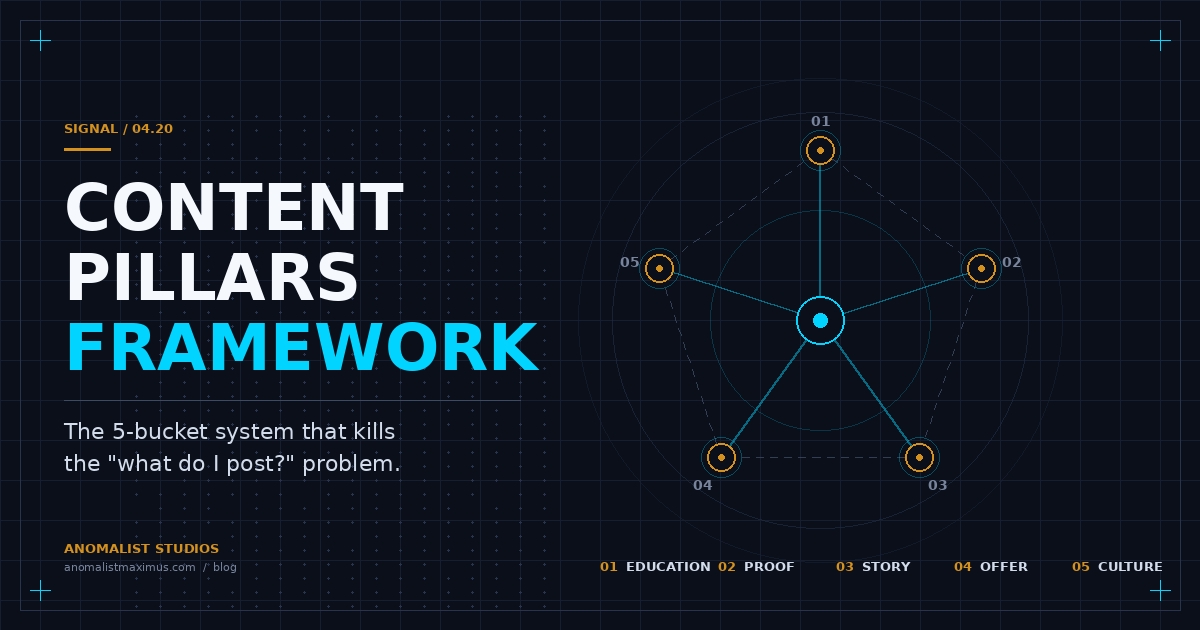
Forget the generic "educate, entertain, inspire, sell" framework. For fitness specifically, here are the five pillars that earn attention and convert. We've written more broadly about building content pillars that don't feel like noise — this is the gym-specific version.
Pillar 1: De-Intimidation Content
This is the single most underused content type in fitness. The point is to show the inside of your space, the friendliness of your staff, and the reality of being a beginner — without performance pressure.
Examples that work:
- A 30-second walkthrough captioned "what your first visit looks like, start to finish."
- A coach answering, on camera, "what should I wear to my first class?"
- A current member talking about their first day: how nervous they were, what was different from what they expected.
- A bathroom and locker-room tour. Yes, really. People want to know.
Pillar 2: Coach Personality
People don't join gyms. They join coaches. If your members can't pick your coaches out of a lineup based on personality alone, your content is too sterile.
The goal isn't every coach doing a polished intro post. It's coaches showing up as themselves — bad jokes, music they program in class, the cue they say a hundred times a week. Members start to feel like they know them before they've ever met them.
Pillar 3: Member Spotlights — But Specific
Most member spotlights fail because they're a press release. "Meet Sarah! She's been with us for two years and we love her!" Nobody cares.
What works: tight, specific stories with a transformation that isn't about the body. "Sarah's first squat was 65 pounds and she was terrified of the rack. Eighteen months later she hit 185. But the win she'll tell you about is that she stopped apologizing in class." Real, specific, emotionally precise.
Pillar 4: Behind-the-Whiteboard Programming
Show the thought behind what you do. A short clip of a coach explaining why this week's programming has more posterior chain work. A photo of the whiteboard with annotations. A 60-second video on why you cycle intensity across the month.
This works because it positions you as a thinking gym, not just a sweat-it-out gym. Even members who don't care about the science feel reassured that someone is thinking about their long-term progress.
Pillar 5: Community Texture
The pizza after Friday night classes. The dog that lives at the front desk. The post-WOD selfies. The Halloween costume class. The grad school sendoff. The fact that members bring their friends to grand-opening day at the new location.
This content has the highest "I want that in my life" pull of anything you can post. It is not a sales pitch. It is the sales pitch.
Platform-by-Platform: What Goes Where
Cut through the noise — not every platform is worth a fitness studio's time, and the ones that are work very differently. Here's the 2026 reality.
Still the home base for most fitness brands. Reels carry your reach, the grid carries your reputation. Two priorities:
- Reels for cold reach. Class clips with captions, coach quick tips (5-10 seconds, not 90), member micro-stories. The platform will push these outside your follower base if the first 2 seconds hook.
- Stories for warm conversion. Schedule changes, last-minute spots open, behind-the-scenes glimpses, polls ("which class do you want me to film next?"). Stories are where members live; they're also where booking conversions actually happen.
Skip the static grid quote tiles. Nobody saves a Tony Robbins quote on a sunset.
Older demographic, but if you serve any market 35+, do not skip it. Facebook is where your local community organizing happens — events, member group chats, "anyone have a recommendation for…?" threads. Your studio's Facebook page is a billboard; your members-only Facebook group is the actual asset. We've covered what works on Facebook for small businesses in 2026 in more detail.
TikTok
Worth your time only if you have a coach who naturally lives on camera and is willing to post 4-5 times a week. The reach can be enormous, but the platform punishes inconsistency more than any other. If you can't commit to 4 posts a week from a single recognizable face, redirect that energy to Instagram Reels and don't feel guilty about it.
Google Business Profile
The most neglected and highest-ROI surface for any local fitness business. Photos of your space, weekly updates about events or new classes, and aggressive review-gathering will move you up the Google Map Pack faster than almost anything else. If you do nothing else after reading this post, fix your GBP. We have a deeper guide on using Google Business Profile posts to drive local discovery.
YouTube
Long-form, high-intent. A series like "five mobility drills for desk workers" or "how to start lifting if you've never been in a gym" pulls people who are actively searching for help. The conversion path is slow but the leads are unusually qualified — and the videos work for you for years.
Worth it only if you have a corporate-wellness or executive-coaching angle. Otherwise, skip.
A Posting Cadence That Won't Burn Out Your Team
You don't need to post twice a day. You need to post on a cadence you can actually sustain for 12 months. Here's a realistic schedule for a small studio with one staff member doing content:
- Monday: One Reel (de-intimidation or coach personality).
- Tuesday: Stories only — schedule reminders, member shoutouts, polls.
- Wednesday: One feed post (member spotlight or behind-the-whiteboard).
- Thursday: One Reel (community texture or class clip).
- Friday: Stories — weekend class push, behind-the-scenes Friday energy.
- Saturday: One Reel or carousel (transformation story or coach Q&A).
- Sunday: One feed post (programming preview for the week) + Google Business Profile update.
That's 5-6 pieces of content a week. Batched on a single Sunday afternoon, it takes about three hours. Build the system once and it runs itself.
The First-Hour Move That Doubles Reach
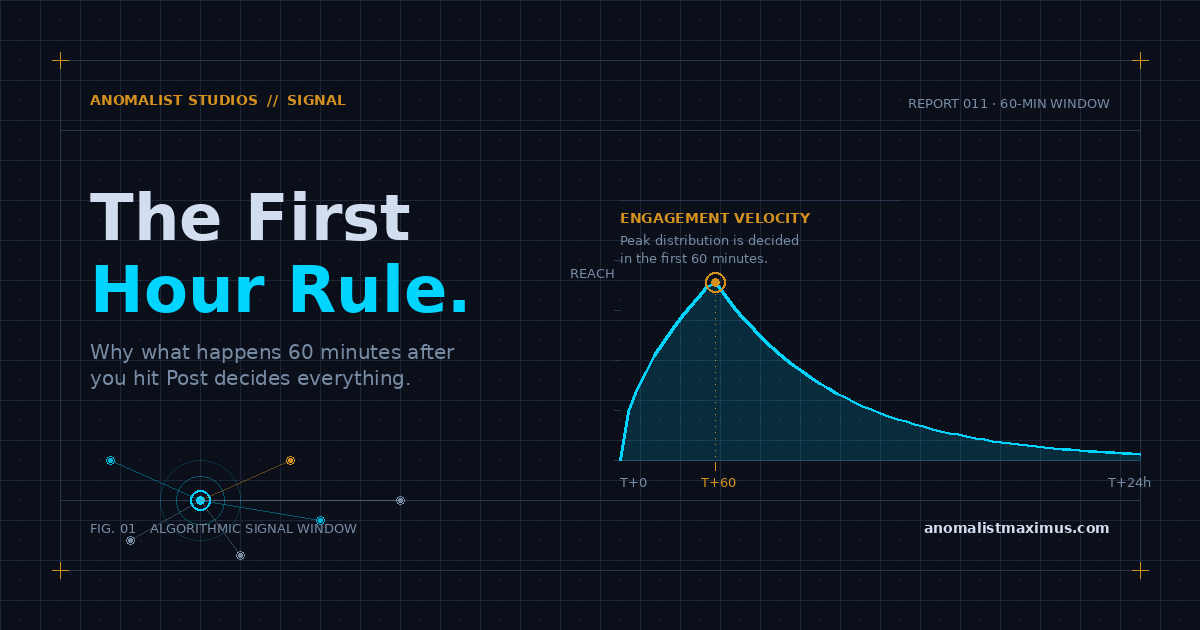
Most studios post and walk away. The first 60 minutes after a post goes live determines whether the algorithm promotes it. If you want a single tactical change that immediately improves reach: have your staff and your most engaged members ready to comment in the first hour. Not "🔥🔥🔥" — actual one-sentence reactions, questions, tags.
We have a full breakdown of the first-hour rule and how to operationalize it, but the short version: a five-person internal engagement team that knows when posts go up will outperform a studio with three times the followers and no plan.
Practical Steps to Implement This Week
- Audit your last 20 posts. How many fall into "de-intimidation," "coach personality," or "community texture"? If it's fewer than five, you have a content mix problem.
- Pick one coach to be the on-camera face for the next 30 days. Rotating faces never builds parasocial connection. One coach for a month builds a following.
- Shoot a "what to expect on your first day" walkthrough video. 60-90 seconds, phone vertical, narrated by a coach. Pin it to your Instagram profile, your TikTok, and your YouTube.
- Set up a Sunday content batching block. Two hours, recurring, on the calendar. Treat it like a class — you don't cancel it because you're tired.
- Build a 15-person internal engagement list. Staff, founding members, your most active people. Brief them quarterly on how and when to engage with posts.
- Fix your Google Business Profile. 20+ photos, weekly post updates, a system for asking for reviews after every successful first session.
- Add one "lapsed member" Story callout per month. Tag-back invitations work. Just a soft "we miss you, come grab a free class on us" — no high-pressure offer.
Common Mistakes That Kill Your Reach
- Posting mirror selfies of empty studios. Nobody scrolls and thinks "wow, what a clean rack." They want to see people using the space.
- Stock photos of dumbbells. The fastest way to signal "I bought a generic content package." Your real space, your real members, your real coaches — always.
- "Transformation Tuesday" without context. A before-and-after with no story is just a body. Without the texture of what changed, it's empty.
- Sales posts more than once a week. "Limited spots! 20% off!" weekly trains your audience to ignore everything you post. Save the sale messaging for launch windows.
- Inconsistent posting then disappearing for a month. The algorithm forgets you. Better to post three times a week forever than seven times a week for a month and then ghost.
- Ignoring DMs for 24+ hours. A prospect who DMs you about pricing has roughly a four-hour window of intent. After that, they've checked out three competitors. Set notifications, respond fast.
- Not having a coach voice baked into AI-generated content. If you're using AI to help with caption volume — which you should — make sure it sounds like a person who actually works at your gym. We've written about how to keep your authentic voice in AI-assisted content.
What Success Looks Like in 90 Days
If you implement this consistently, here's what changes in the first quarter:
Days 1-30: not much, externally. You're shooting, batching, posting, and the algorithm is still figuring out who you are now versus the old version of your account. Don't panic. Don't change strategy. Keep going.
Days 30-60: Reels reach starts to climb. Trial bookings from the "where did you hear about us?" line item shift from "Google" toward "Instagram." Your DM volume goes up — including from past members and people you've never met.
Days 60-90: The compounding kicks in. Members start tagging your studio in their own content. Local micro-influencers reach out asking about a trade. Your Google reviews go from 22 to 60 because you finally built the ask into the experience.
Three months is the floor. Six months is where the studios that committed to this start to look genuinely different from the studios that didn't.
The Bottom Line
Let me be clear about what social media for a fitness studio actually is. It's not a billboard. It's not a coupon channel. It's not where you announce things. It's the front porch of your business — a place where prospects can sit, take you in, and feel out whether this is a community they want to walk into.
The studios winning right now aren't the ones with the best lighting or the most reels per week. They're the ones that have decided their content has a job: dissolve the hesitation between a stranger and the door. Everything else — class fills, trial-to-membership conversions, retention — follows from that.
You've got the building, the coaches, and the community. The work is just to show it honestly, consistently, and with enough specificity that someone scrolling past at 9pm thinks, "I could walk into that place tomorrow."